Overview
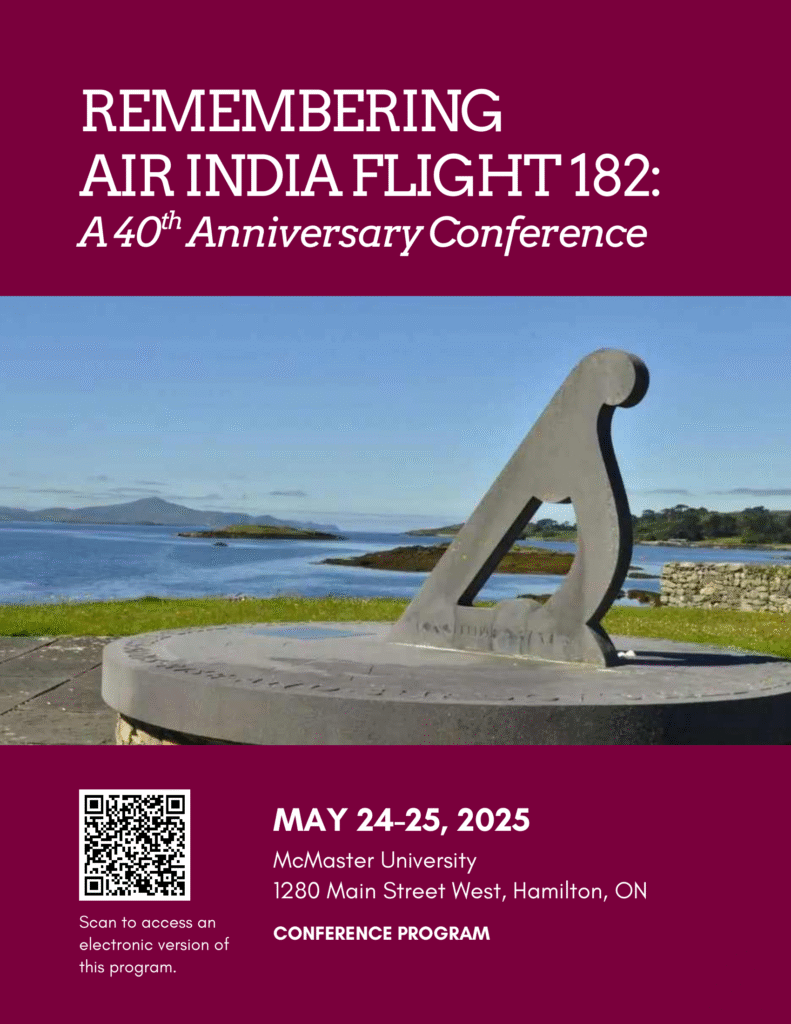
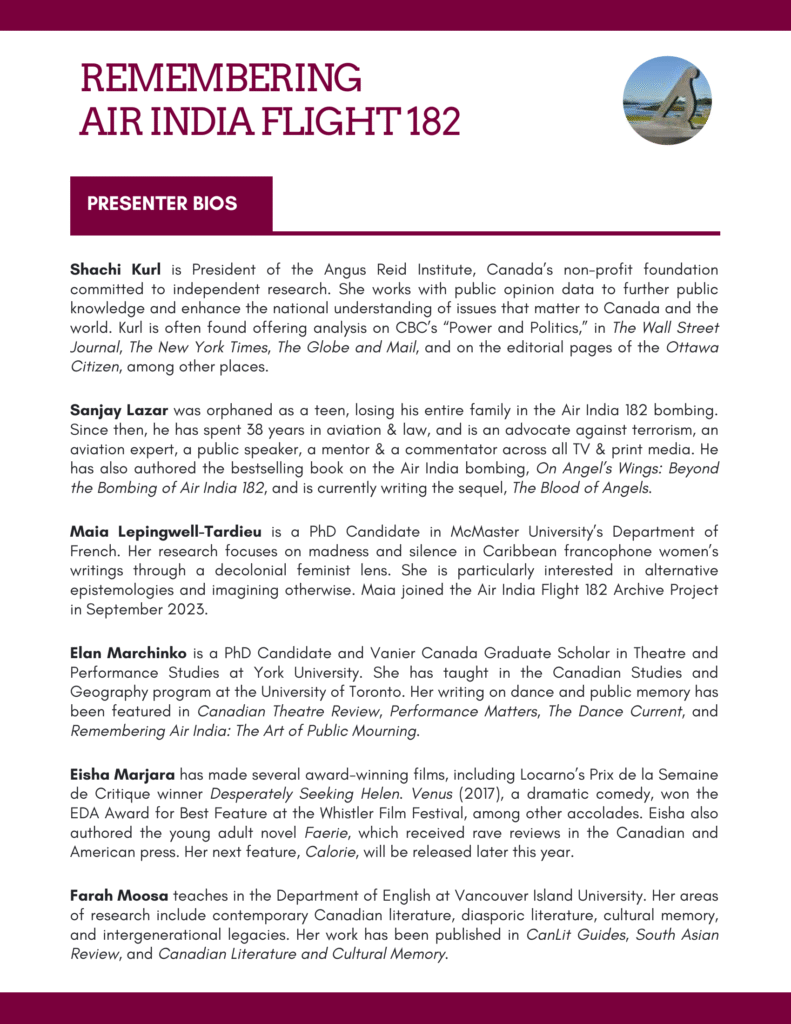
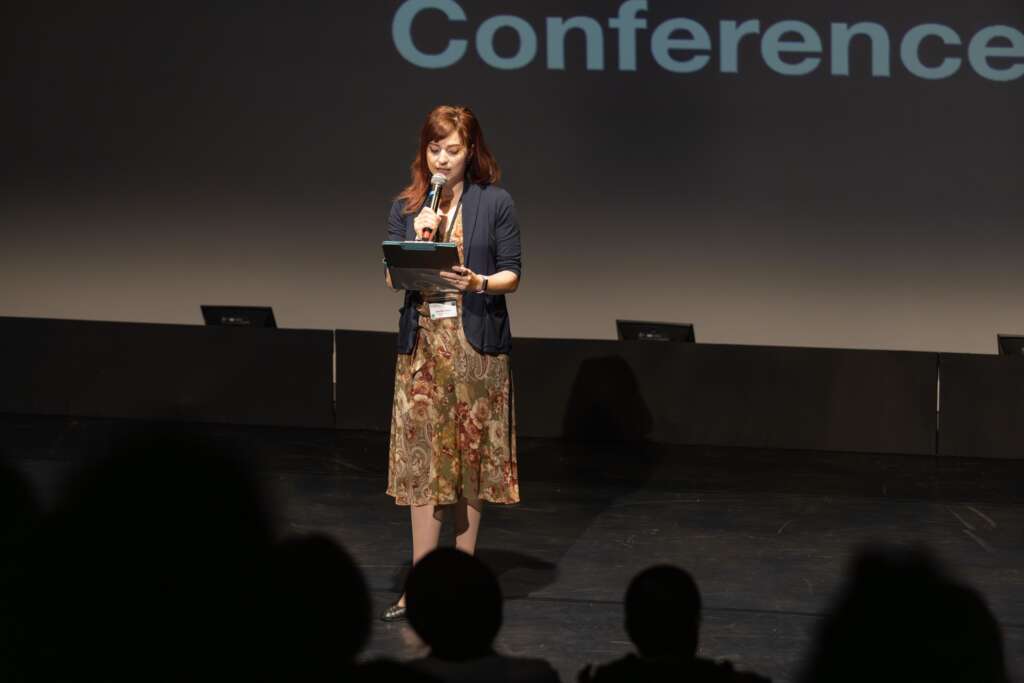
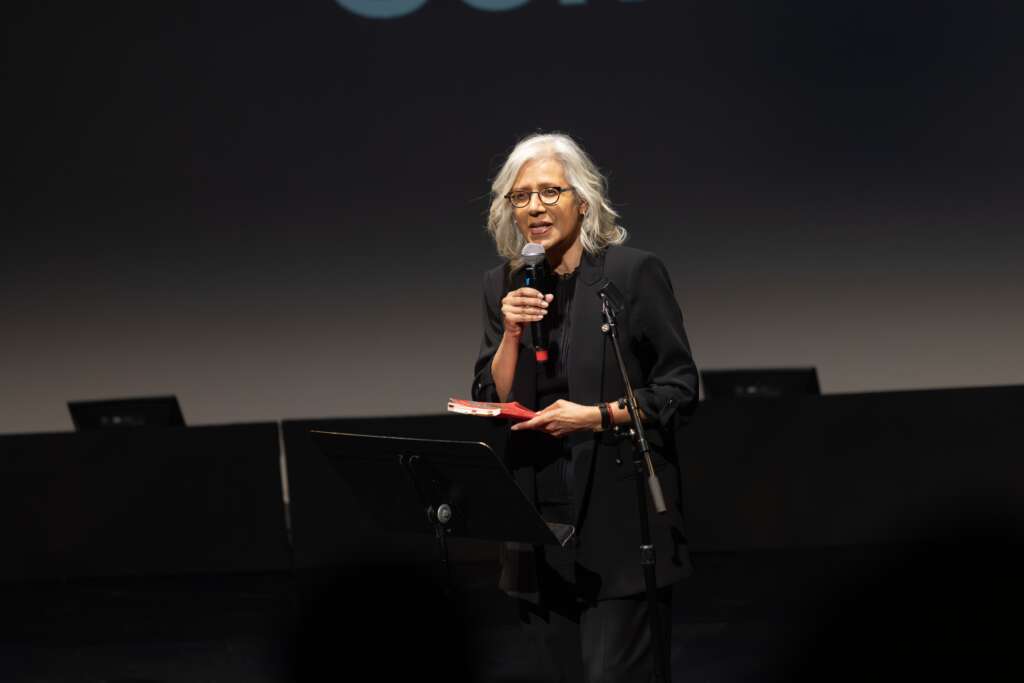
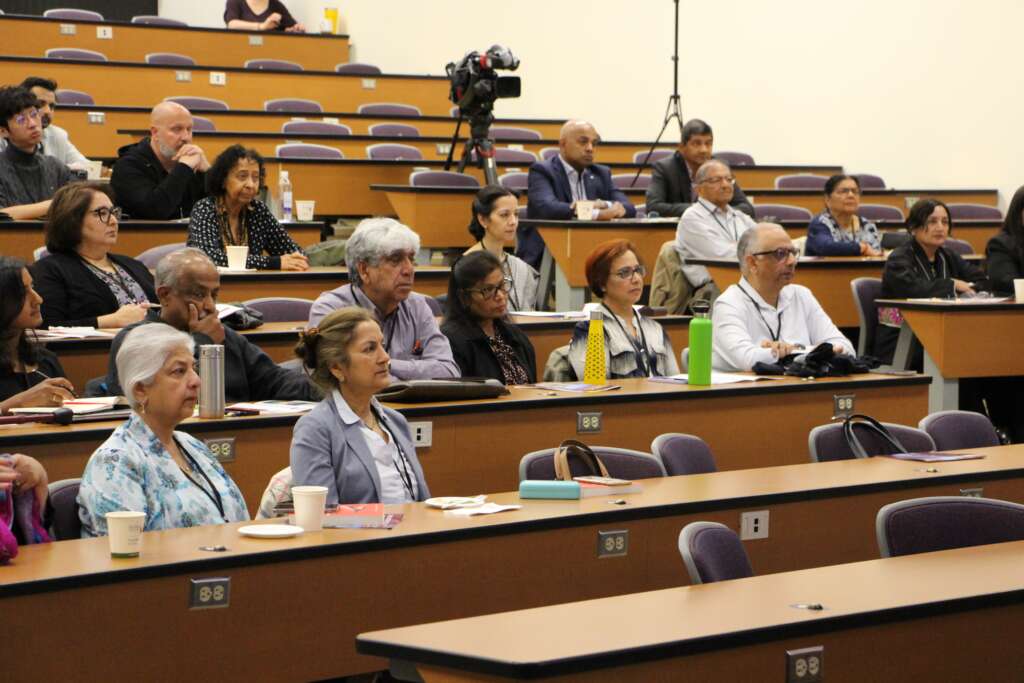
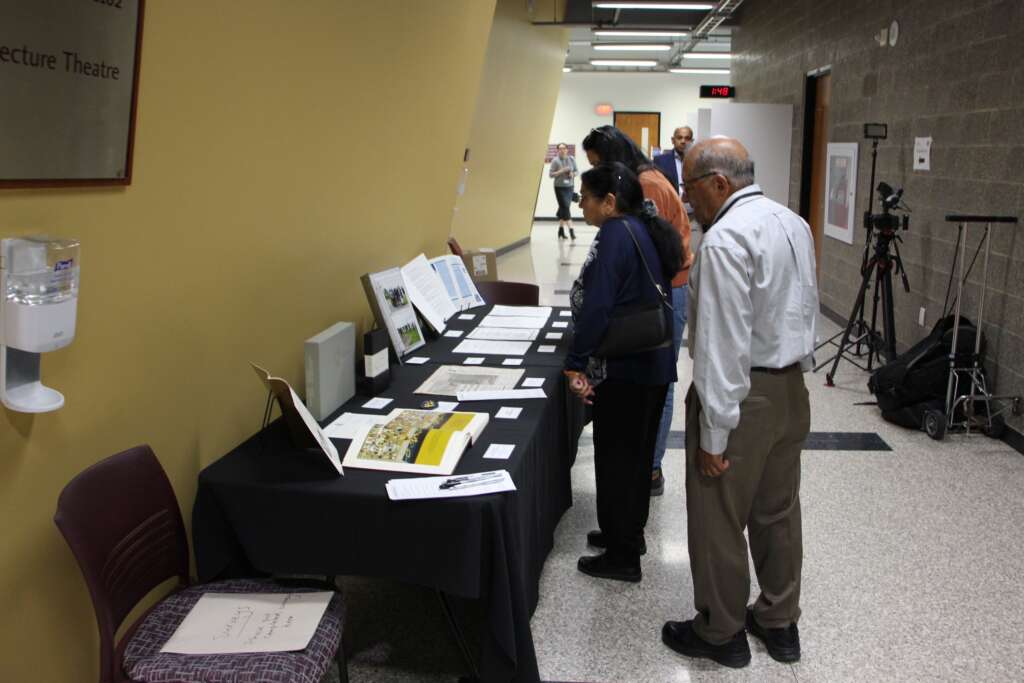
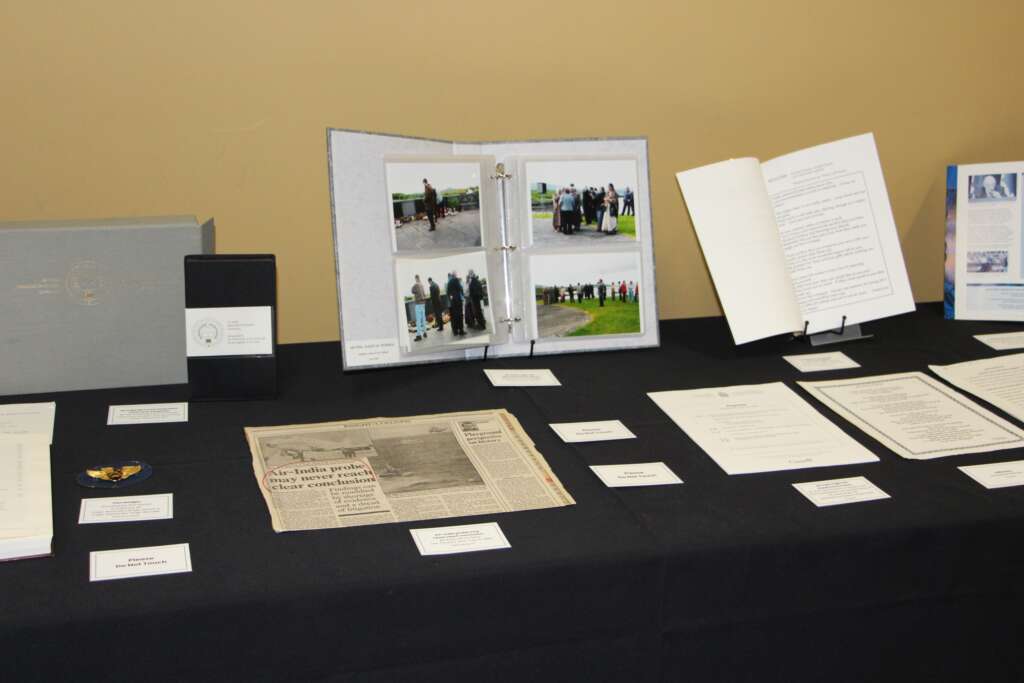
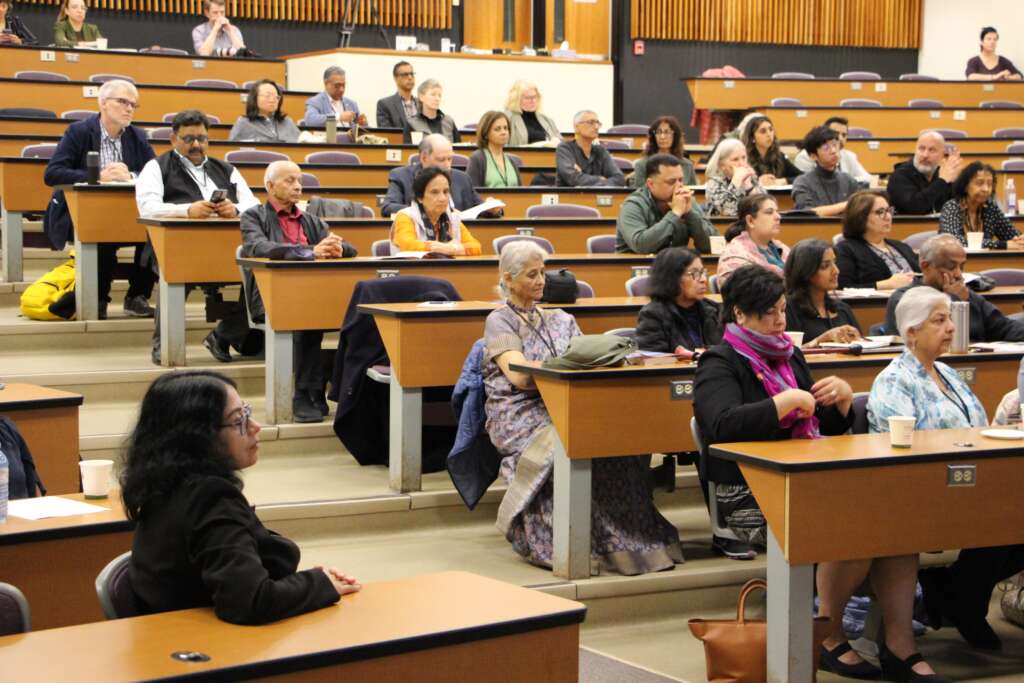
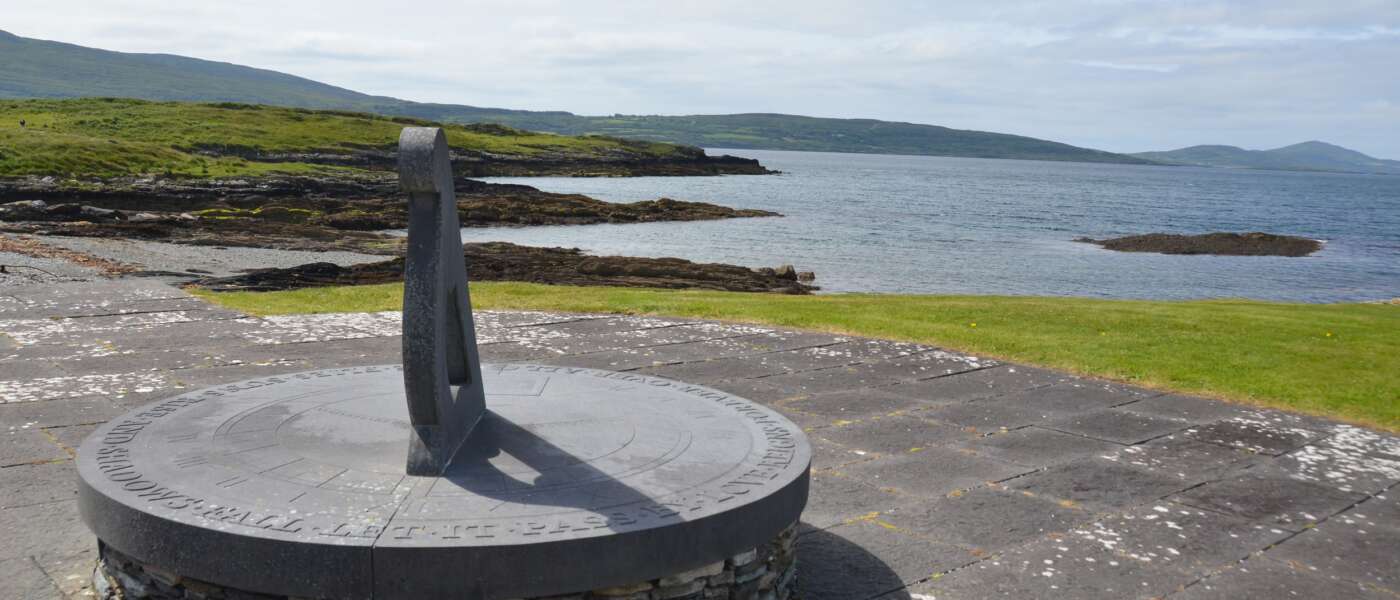
To mark the 40th anniversary of the Air India bombings, a commemorative conference was held at McMaster University on May 24-25, 2025. We gathered together to bear witness to the losses of those aboard Flight 182 and to the grieving, organizing, and labour of those who have kept the memories of their loved ones in the public consciousness for the past forty years. The conference recordings (to be published shortly), we hope will encourage a deeper engagement with the Air India tragedy and its aftermath.
Conference News Article
Special conference and online archive commemorate 40th anniversary of Air India bombing Read Article
By Sonia Verma
Conference Videos 2025 Day 1
Opening Remarks
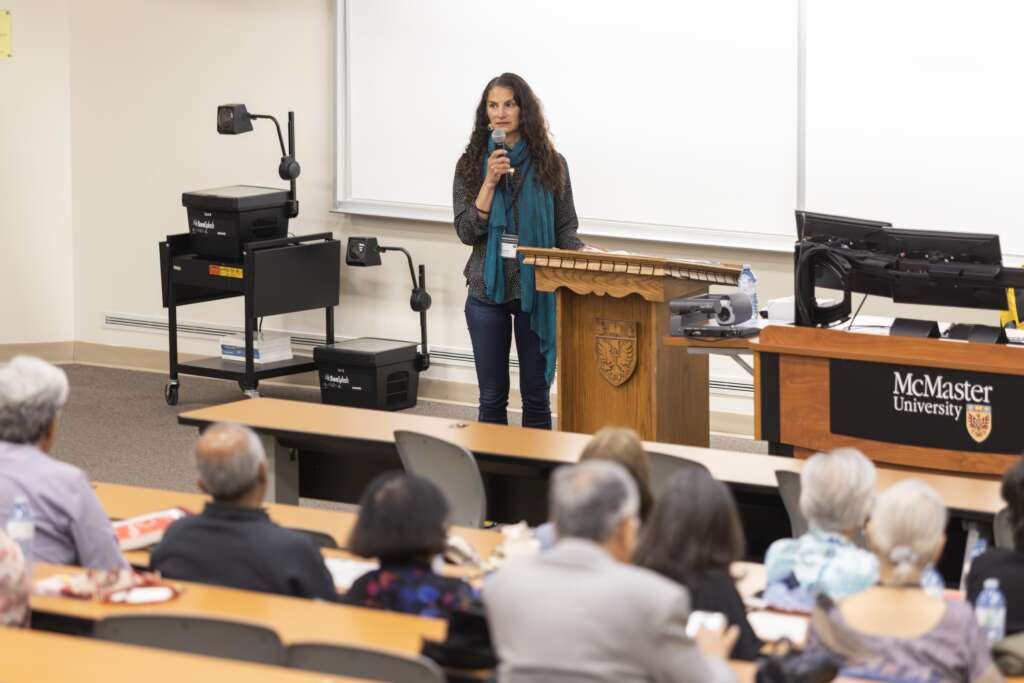
Remembering Air India Flight 182: A 40th Anniversary Conference, began Saturday, May 24th, 2025, at McMaster University. Conference co-organizers Dr. Chandrima Chakraborty and Dr. Amber Dean of McMaster’s Department of English & Cultural Studies opened the conference alongside Dr. Bal Gupta, founder of the Air India Victims’ Families Association, and Shachi Kurl, President of the Angus Reid Institute. Their collective remarks welcomed attendees to the commemorative event and framed the remembrance of the Air India tragedy as a collective, not sectarian, history. Dr. Dean stressed the shared responsibility of remembering, particularly amid heightened nationalism, while Dr. Chakraborty highlighted the persistent silence surrounding the bombing in Canada’s national memory and called for community solidarity to counter erasure and honour the activism and ongoing grief of victims’ families and loved ones. Dr. Gupta further emphasized this call, grounding remembrance within compassion and education rather than revenge, despite the Canadian government’s long-standing indifference towards victims’ families. Concluding the remarks, Kurl stressed the urgency for intergenerational collaboration to rebuild empathy and public understanding of the Air India Flight 182 tragedy. Together, speakers emphasized the importance of remembrance to prevent recurrence and foster reparation, calling for the Air India Flight 182 tragedy to be centered within Canadian public memory.
Conference Day One
Opening Remarks
The conference opening remarks spoke to the need to remember the Air India tragedy as a shared Canadian history. Together, speakers called for renewed public awareness and intergenerational remembrance to ensure the tragedy remains central to Canada’s collective memory and grounded in compassion, education, and solidarity.
Air India Archive Launch
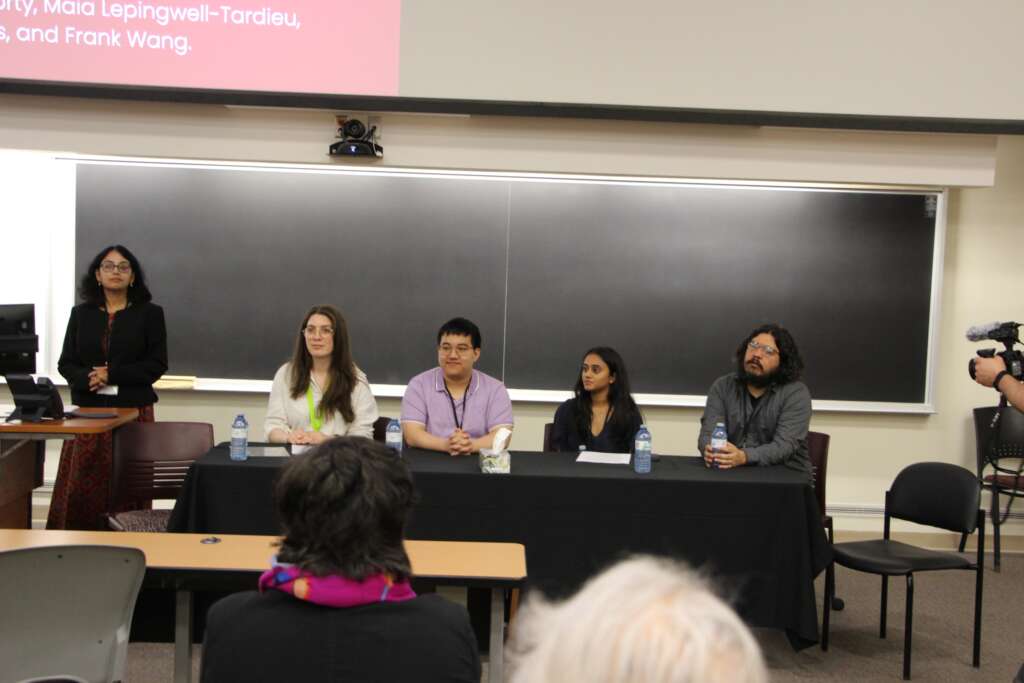
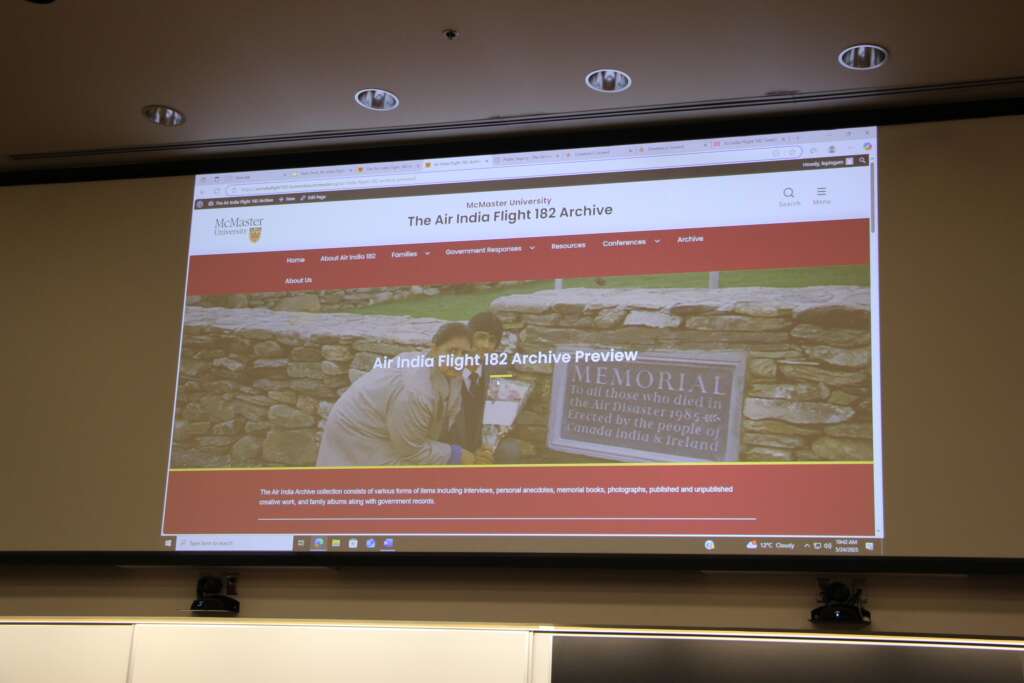
Following the Remembering Air India Flight 182: A 40th Anniversary Conference opening remarks, the Air India Flight 182 Archive was formally launched at McMaster University. Led by Dr. Chandrima Chakraborty, a Professor in McMaster’s Department of English & Cultural Studies, the team – Maia Lepingwell-Tardieu (Research Coordinator), Jil Shah (Web Developer), Dr. Alejandro Franco Briones (Research Assistant – Digitization and Archive Curation), and Frank Wang (Research Assistant – Geographical Mapping) – shared their experiences and reflections on building the physical and digital archive. Dr. Chakraborty opened the presentation, speaking to the creation and aims of the archive. By documenting the ongoing grief of the Air India families, the archive intends to centre the voices of victims’ loved ones, bring their experiences into national consciousness, and preserve the legacy of the lives lost to counter silences caused by injustice. Lepingwell-Tardieu further shared questions surrounding the ethical representation of grief and memorialization that guide the team’s work, alongside efforts to diversify the voices included, move away from traditional forms of archiving, and include artifacts from different mediums. Shah then spoke to the creation of the Air India Flight 182 Archive website, designed to educate the wider public about the tragedy and continuing activism of the families, and guided by principles of accessibility, inclusion, and sustainability. Outlining his role as digitization lead, Dr. Franco Briones detailed the processes involved in digitizing the physical archive while honouring the emotional value of the artifacts themselves, before Wang outlined his recent contributions to the project, including the Air India Flight 182 Flightpath Video, and timelines detailing events surrounding the tragedy and subsequent inquiry. Emphasizing a praxis rooted in care and compassion, the team expressed their commitment to preserving and safeguarding the materials and memories housed within the archive and hope for the project to continue to grow.
Air India Archive Launch
Team members formally launched the Air India Flight 182 Archive, sharing their experiences and reflections on building the digital and physical archive. Presenters outlined the archive’s aims to ethically document grief and resistance, preserve memory, and counter silence; to incorporate diverse media representing multiple responses to loss; to prioritize accessibility and sustainability in design; and to educate a wider public. Grounded in care and compassion, the project aims to honour the lives lost and ensure their stories continue to be heard.
Air India Families Roundtable
To centre the voices of those left to mourn and seek justice in the wake of the Air India Flight 182 tragedy, the second panel of Remembering Air India Flight 182: A 40th Anniversary Conference brought together Susheel Gupta, Anita Dhanjal, Deepak Khandelwal, Nisha Thampi, and Jayashree Thampi to reflect on four decades of remembrance and activism. With moderator Dr. Amber Dean of McMaster’s Department of English & Cultural Studies, panelists shared personal experiences of loss and resilience. Dhanjal, who lost her sister, spoke to the ongoing pursuit of justice and the intergenerational trauma that continues to affect the South Asian community. Dr. Gupta, who lost his mother at age twelve, discussed the families’ early struggles for recognition and the creation of the Air India Victims’ Families Association as a space for collective advocacy, while Khandelwal, who lost two sisters, highlighted the government’s persistent failures of support and security, contrasting them with more recent, though still limited, improvements in official response. Jayashree Thampi then reflected on her path from private grief to public activism, recalling her role in establishing memorials across Canadian cities despite systemic barriers and personal hardship. Nisha Thampi, who lost her mother in the Flight 182 tragedy, further spoke to the absence of meaningful government commemoration and the need to integrate the tragedy into national education, policy, and public memory. The roundtable emphasized the memorials’ power to sustain connection, transmit stories to new generations, and reaffirm resilience through remembrance. As Dr. Dean noted, the Air India families’ decades of advocacy have ensured that the Air India Flight 182 tragedy endures not only as a story of loss, but as a vital part of Canada’s collective history.
Air India Families Roundtable
The “Air India Families Roundtable” spoke to forty years of remembrance and advocacy of those left to mourn in the wake of the Air India Flight 182 bombing. Speakers reflected on personal loss, intergenerational trauma, and the collective labour of keeping the tragedy in Canadian public memory. Together, they emphasized the enduring strength of the Air India families in confronting government neglect and transforming grief into solidarity, compassion, and public education.
Air India Narratives in Teaching, Media, and Government Discourse
The third panel of the conference, “Air India Narratives in Teaching, Media, and Government Discourse,” featured scholars Dr. Jessica Young, Santa Clara University; Maya Seshia, University of Alberta; and Dr. Meera Nair, Northern Alberta Institute of Technology; with moderator Dr. Steve Hewitt, University of Birmingham. Together, panelists examined how teaching, research, and public engagement contribute to remembering the Air India Flight 182 tragedy. Dr. Jessica Young reflected on her journey from graduate student to scholar, emphasizing how the tragedy, though largely absent from U.S. public memory, elicited deep empathy among her students – particularly students of colour who recognized parallels between this erasure and the marginalization of their own histories. She spoke to her encouragement of students to approach history through compassion and creativity, highlighting the importance of archives addressing gaps and countering institutional neglect. Drawing on her long record of scholarship and advocacy, Dr. Meera Nair then spoke to the Canadian government’s persistent failure to recognize Air India Flight 182 as a national tragedy. Decades-long struggles for official acknowledgment reflect the continued erasure of South Asian Canadians within national narratives. Dr. Nair concluded by affirming the dignity and perseverance of the victims’ families, whose activism restores faith in humanity and challenges indifference in the face of ongoing prejudice. Together, panelists reflected on the critical role of education, archives, and creative works in shaping national and transnational memory.
Air India Narratives in Teaching, Media, and Government Discourse
The “Air India Narratives in Teaching, Media, and Government Discourse” panel explored how scholarship, pedagogy, and activism shape the remembrance of Air India Flight 182. Panelists reflected on the erasure of the tragedy from public consciousness, especially outside of Canada, and the critical role of education, archives, and creative works in fostering empathy, accountability, and inclusion within national and transnational narratives of memory.
Commemorating the Air India Tragedy through Arts
Commentary by Elan Marchinko
October 31, 2025
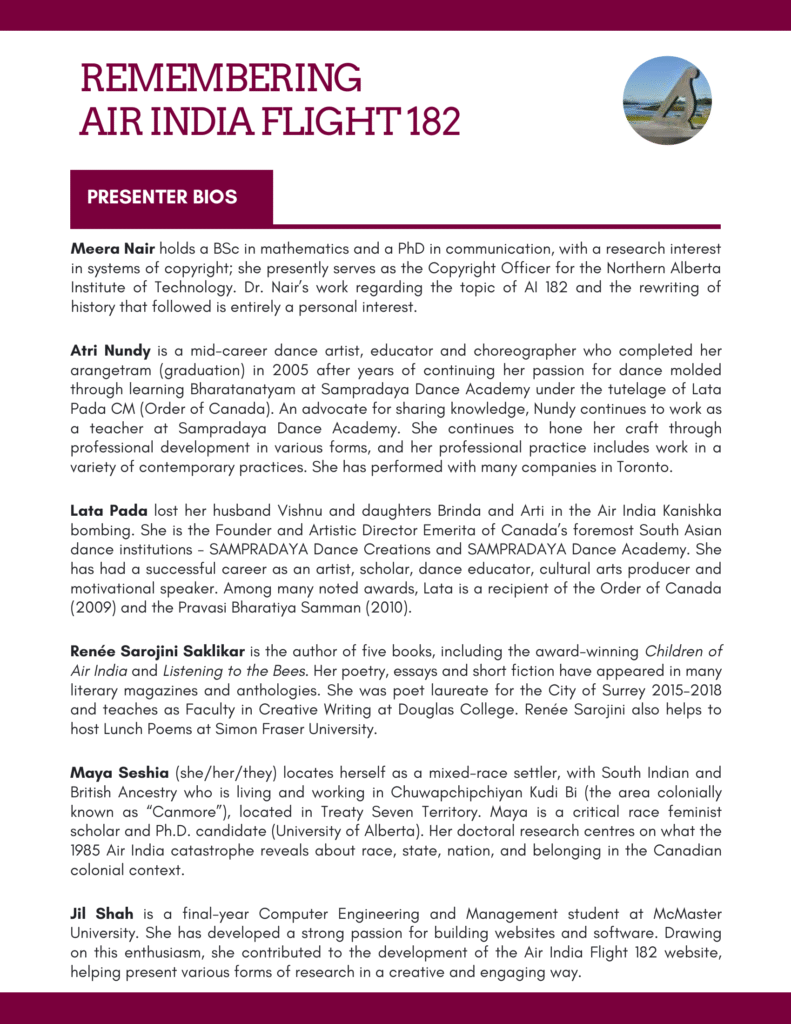
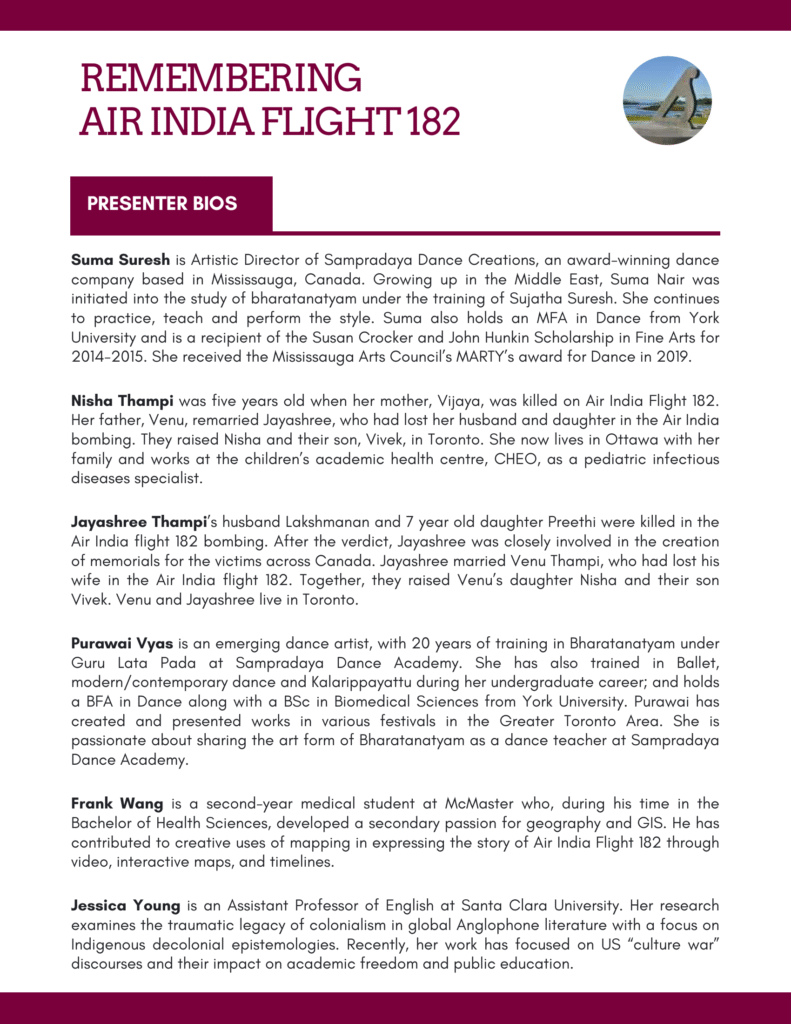
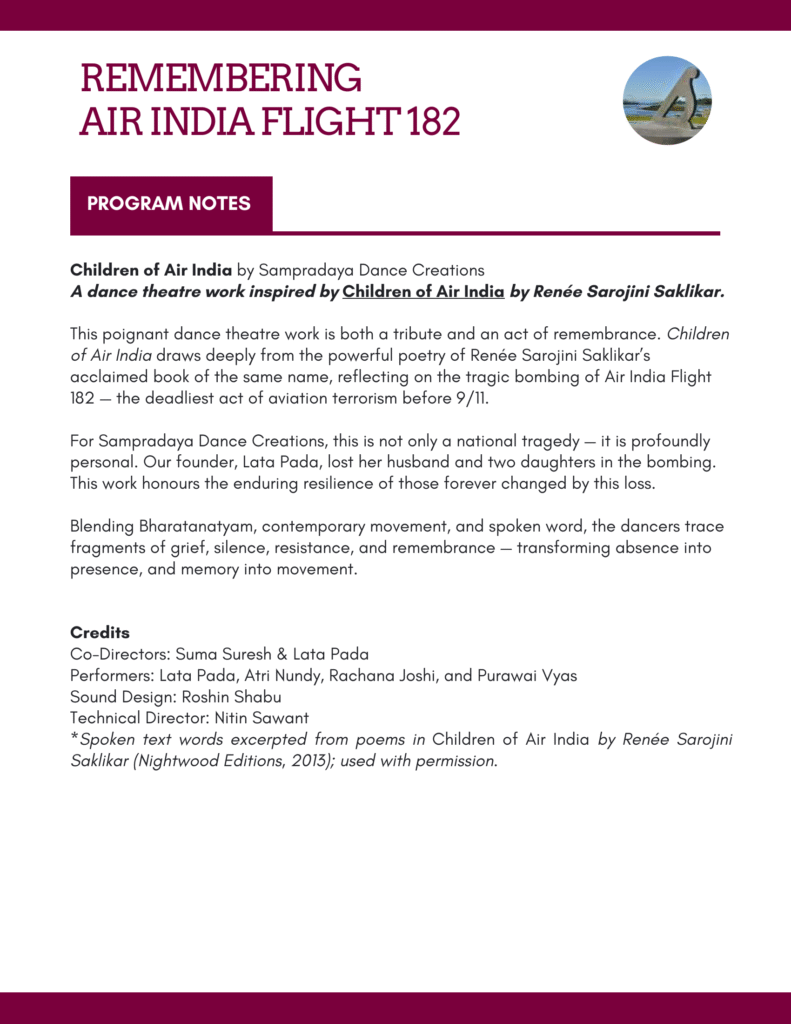
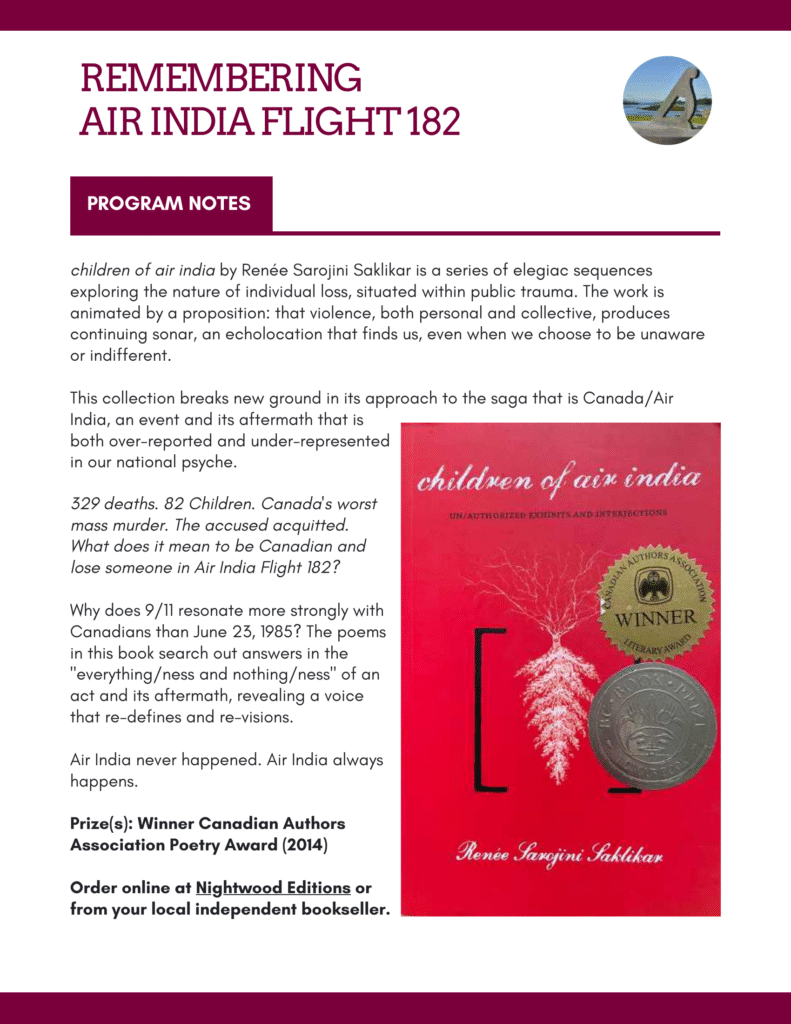
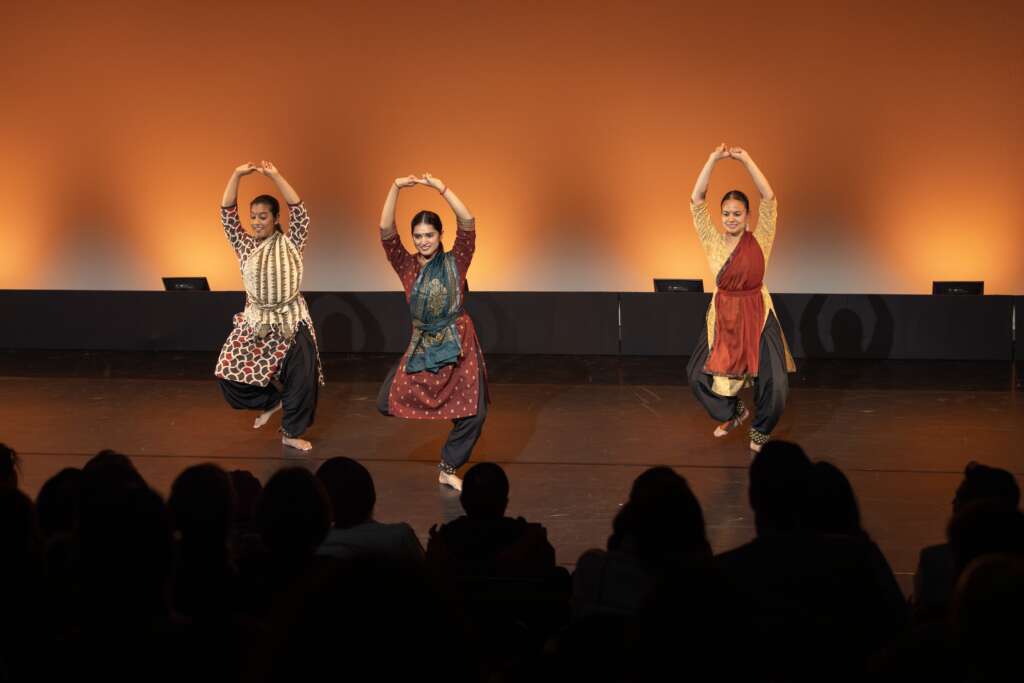
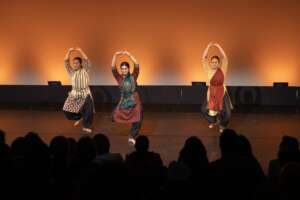
The Air India creative archive is a body of artistic works that depict the events and aftermath of the 1985 bombings. For the artists, these works are labours of love through which they honour family members and friends who perished. For the audience, the immediacy of art can compel us to understand this forgotten history, recruiting us as witnesses, and even inheritors, of its continuing story. This panel focused on the intersection of dance and poetry, featuring the world premiere of Children of Air India, presented by the acclaimed company Sampradaya Dance Creations founded by Lata Pada. The piece is inspired by selected poems from children of air india: un/authorized exhibitions and interjections by Renée Sarojini Saklikar, a collection of elegies dedicated to the youth who tragically lost their lives in the disaster, 82 of whom were children under the age of 13.
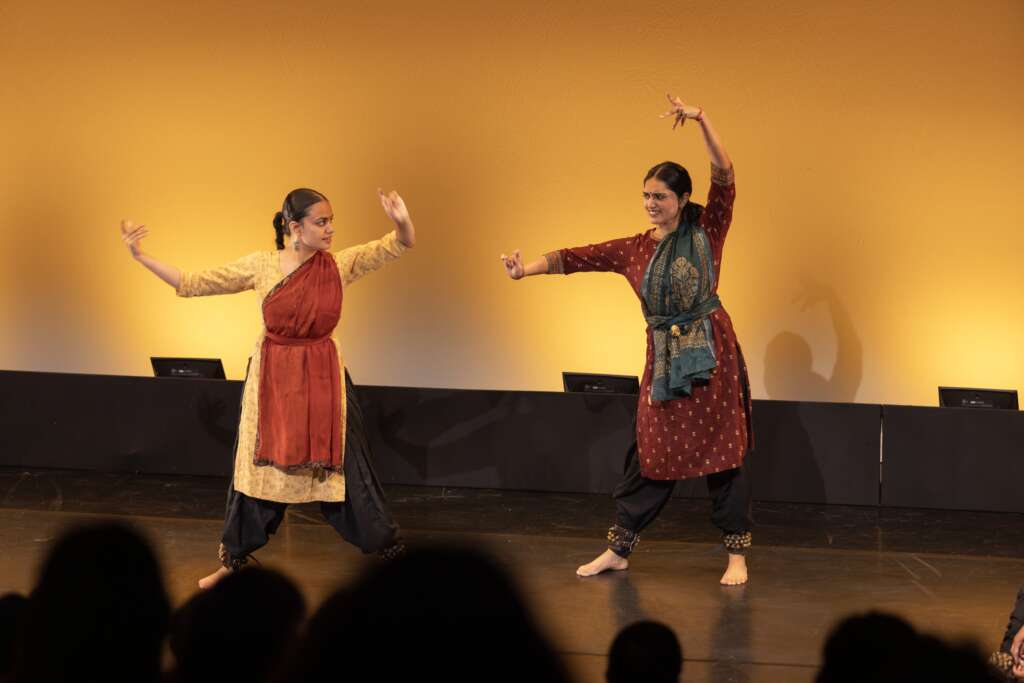
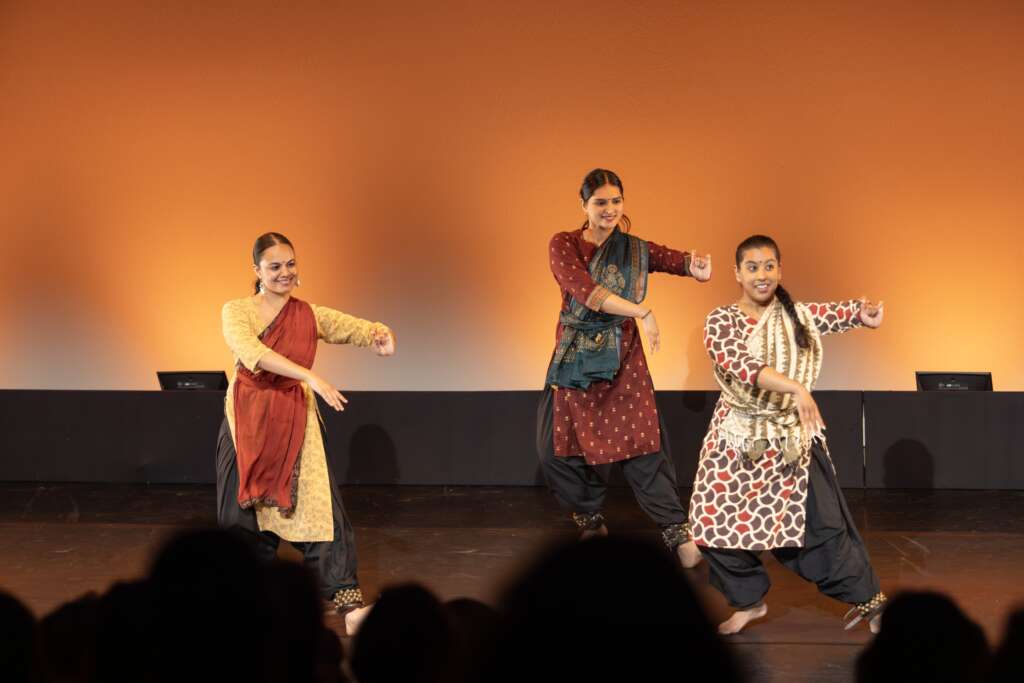
Choreographed by Lata Pada and Suma Suresh, Children of Air India specifically honours the voices of the young women who were lost on the flight, several of whom were dancers. While, classical Indian dance often tells the stories of gods and goddesses, it is the pop music of Wham that opens the piece as the three dance artists—Atri Nundy, Rachana Joshi, Purawal Vyas—enter the space. This choice of music effectively places the audience in the youth culture of 1985 Canada. The dancers engage in lively conversation as they fasten their ankle bells and stretch their muscles. They commence their rehearsal, reviewing the sculptural Bharatanatyam phrases with spiritual reverence. The buoyancy in the dancers’ steps mirrors their youthful spirits, serving as a poignant reminder of the immense potential lost and the significant contributions these youth could have made to the world.
The next scene captures the atmosphere of an airport as the young women mime saying goodbye to their families before embarking on flight 182. As they dance, the performers recite the poetic stanzas of Sarojini Saklikar, with the words illuminating the contradictions faced by children of immigrant families as they navigate their hybrid identities as Canadians of South Asian descent. Saklikar’s docu-poetics intertwine “official” narratives with imagined recollections, creating a space for the children’s memories as they contend with feelings of not being fully accepted as Canadian, alongside the expectations of duty imposed by their communities, all while striving to pursue their own dreams.
The piece concludes with the entrance of Lata Pada, whose gestures of touching the dancers’ heads convey a profound sense of care and spiritual tribute to their memories. They are reminiscent of her own daughters, Brinda and Arthi, whom she lost in the tragedy. At the same time, these dancers are highlighted as part of the legacy of Pada and Sarojini Saklikar, representing their artistic descendants. Furthermore, Children of Air India compellingly draws the audience into this Canadian tragedy as both witnesses and inheritors of its legacy.
Commemorating the Air India Tragedy through Arts
This commemorative performance by Sampradaya Dance Creations (directed by Lata Pada and Suma Suresh with dancers Rachana Joshi, Atri Nundy, and Purawal Vyas) and poetry reading by Renée Sarojini Saklikar reflected on grief, resistance, and resilience through art, exploring remembrance through creative expression. The performances drew on Saklikar’s poetry collection, children of air india, transforming personal loss into collective memory, showing how dance and poetry can act as powerful forms of elegy and healing. The performance was moderated by Elan Marchinko, a PhD Candidate and Vanier Canada Graduate Scholar in Theatre and Performance Studies at York University.
Conference 2025 Videos Day 2
Memorializing Air India
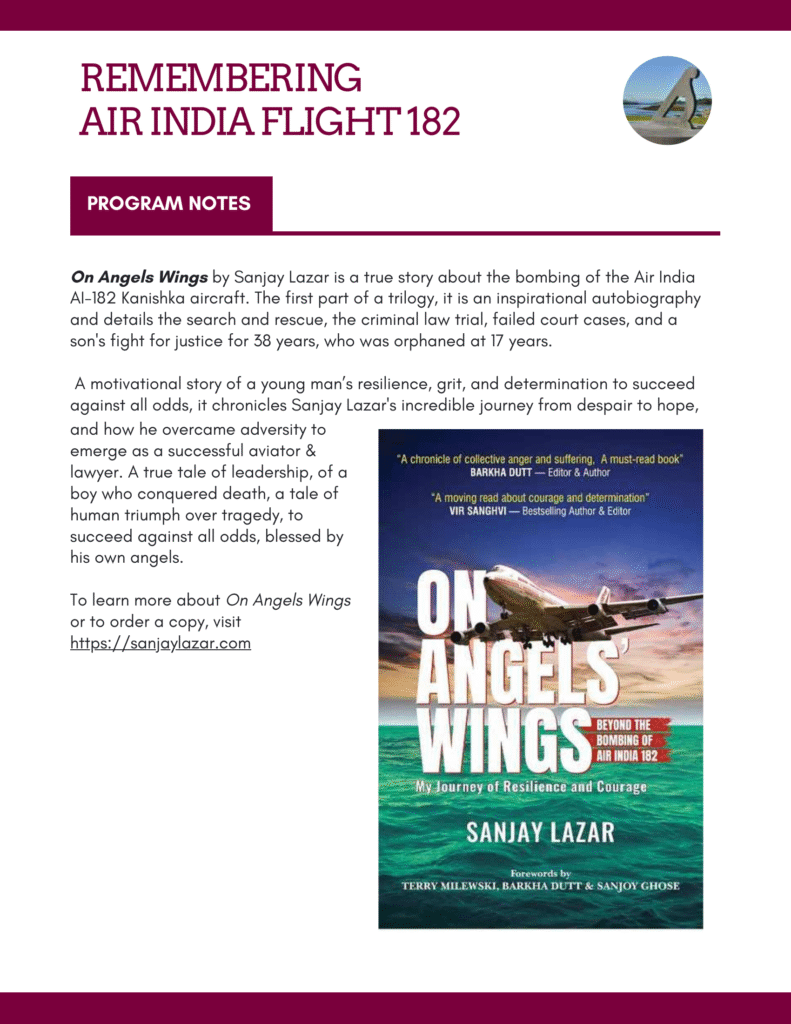
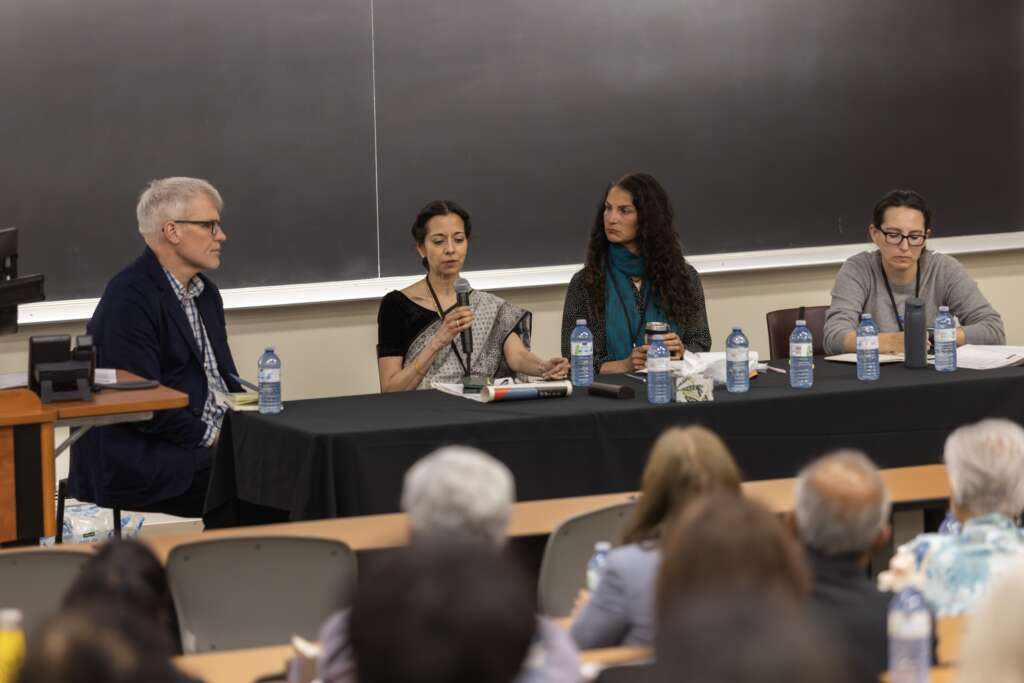
Day Two of Remembering Air India Flight 182: A 40th Anniversary Conference began with “Memorializing Air India,” a panel during which of family members and scholars discussed remembrance of loss through memoirs and memorials. Sanjay Lazar; Rajiv Kalsi; Dr. Amy Fung, Carleton University; and Dr. Angela Failler, the University of Winnipeg; with moderator Dr. Amber Dean, reflected on visions for cross-cultural solidarity and justice, examining how remembrance, justice, and cultural memory of Flight 182 continue to unfold across generations. Sanjay Lazar opened the panel, sharing personal reflections on navigating the bombing as the lone surviving member of his family. His memoir, On Angels’ Wings, chronicles this journey and his ongoing fight against injustice. Rajiv Kalsi then reflected on the memorial practices that have helped his family cope with the loss of his sister, alongside the institutional indifference faced when attempting to introduce the tragedy into local school curricula. Drawing on her research into grief and racialized public memory, Dr. Amy Fung presented on how the Canadian state has historically framed the bombing as a foreign tragedy, despite the overwhelming loss of Canadian lives. Contradictions across state apologies have routinely othered victims and failed to recognize them as fellow Canadians, thus perpetuating the erasure and marginalization of racialized communities in the Canadian historical record. Finally, Dr. Angela Failler spoke to her longstanding research on cultural public memory and the shifting afterlives of the 1985 bombings across film, literature, archives, and community-based remembrance practices. This work highlights the societal impacts and lasting patterns of racial marginalization of the bombings, including their use to justify counterterrorism policies that disproportionately affect minority and Indigenous communities. Through personal testimony and critical scholarly insight, this panel emphasized the ongoing struggle to keep the tragedy in public consciousness to prevent the re-victimization of Air India Flight 182 families and the reoccurrence of such violence. Memorialization must be framed as an ongoing practice – one that engages community activism, education, scholarship, and public memory work to honour victims and ensure that the cultural afterlife of the bombings remains present for future generations.
Conference Day Two
Memorializing Air India
Featuring both family members and scholars, the “Memorializing Air India” panel explored the many ways remembrance, mourning, and justice continue to take shape forty years after the bombing of Flight 182. Panelists reflected on personal and collective loss, the silencing of racialized communities within dominant narratives, and the power of memoirs, memorial sites, education, and public memory work to counter erasure.
Remembrance as a Difficult Return: Envisioning an Air India Public Exhibit
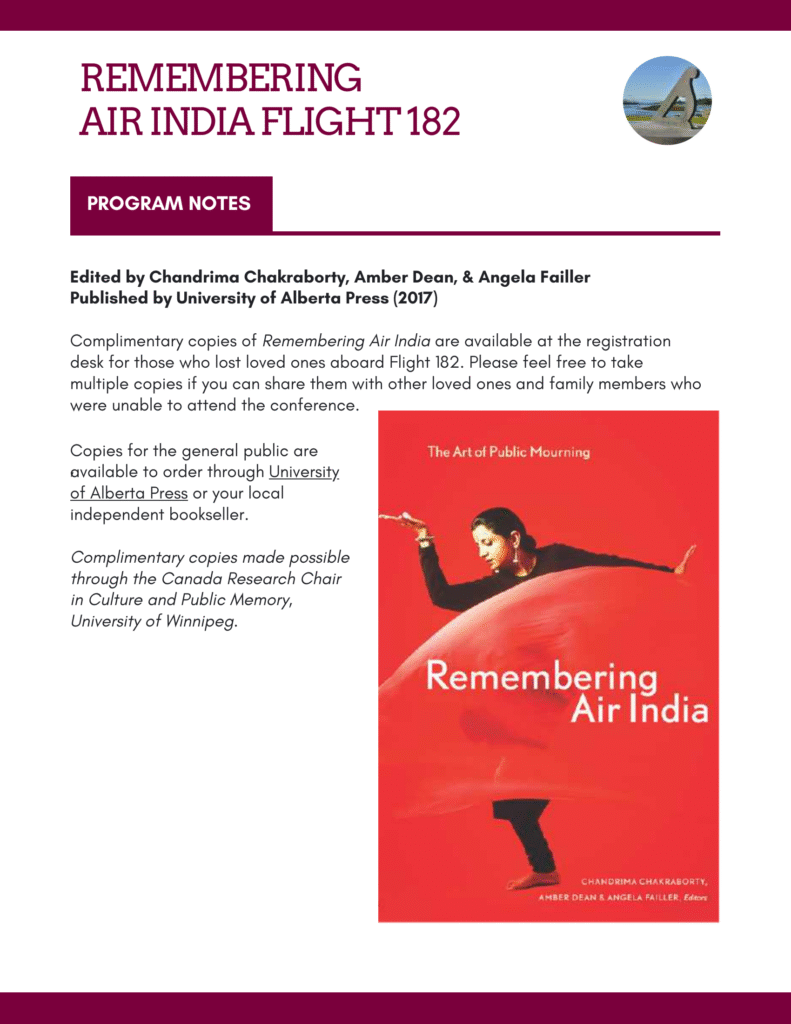
Featuring Nisha Thampi and Dr. Angela Failler, “Remembrance as a Difficult Return: Envisioning an Air India Public Exhibit” explored what it could mean to create a national public exhibit dedicated to the Air India bombings. The session wove together personal history, public memory, and curatorial practice to illuminate the complexities of returning to a trauma long silenced within Canada’s national narrative. Nisha Thampi opened the presentation, describing her difficult return to the Flight 182 tragedy following decades of silence after the loss of her mother. The motivation to counter the erasure surrounding the bombing led Nisha to working on a public exhibit with Dr. Angela Failler, Canada Research Chair in Culture and Public Memory at the University of Winnipeg, and the Air India Victims’ Families Association. Dr. Failler then spoke to the significance and the limits of existing memorials, positioning the Air India Flight 182 Archive and exhibit as reparative interventions tied to the Thinking Through the Museum project. The session highlighted how exhibits can counter public distancing by foregrounding families’ agency, intentional learning, and community justice, alongside the need for careful and ethically attuned approaches when dealing with trauma. Through intentional curation and community collaboration, the presenters hope an exhibit will bring the tragedy fully into Canada’s national consciousness, prompting audiences to reflect on grief, justice, and belonging, while reckoning with histories the nation has long refused to see.
Remembrance as a Difficult Return: Envisioning an Air India Public Exhibit
In “Remembrance as a Difficult Return,” Nisha Thampi and Dr. Angela Failler discussed their collaborative effort to develop the first public exhibit dedicated to the Air India Flight 182 bombing. With a focus on intergenerational trauma, community memory, and public education, the presenters outlined their vision for an Air India public exhibit that centres the voices of families, challenges the ongoing marginalization of the tragedy, and acts as a site for learning, witnessing, and healing.
Film screening of excerpts from Calorie, a new feature film written and directed by Eisha Marjara
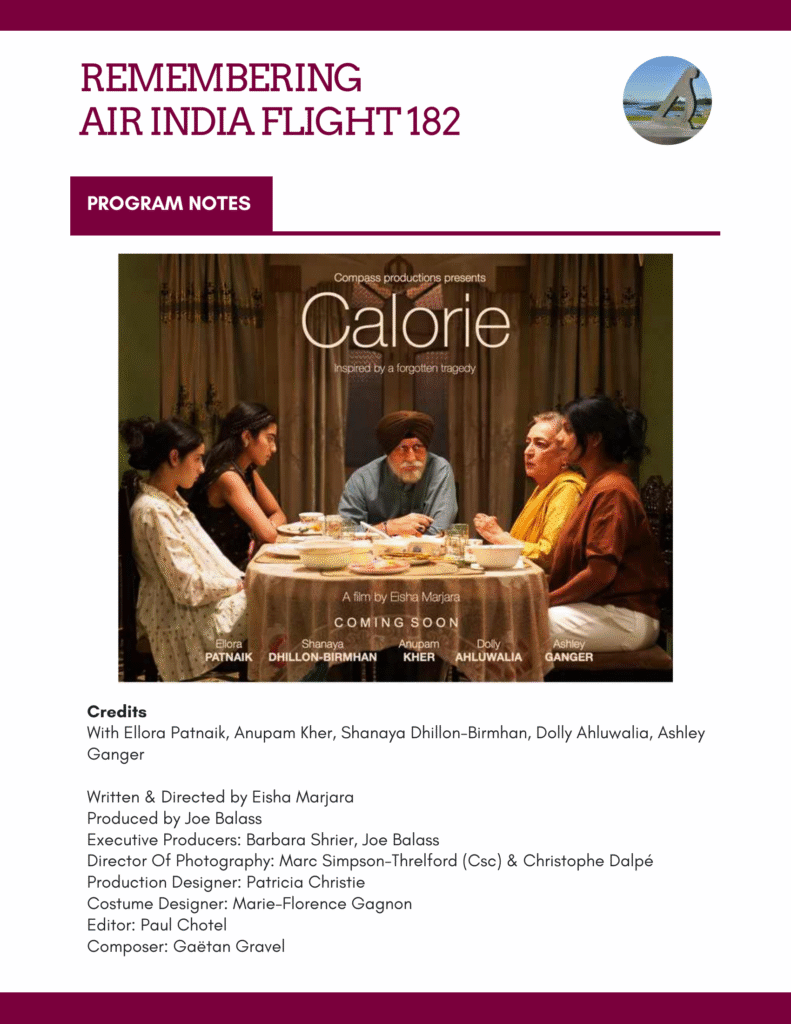
For the closing session of Remembering Air India Flight 182: A 40th Anniversary Conference, Dr. Amber Dean welcomed filmmaker and author Eisha Marjara to screen and discuss clips from her upcoming film, Calorie (2025). As the first full-length feature film to discuss the Air India Flight 182 tragedy, Calorie presents a commentary on the legacies of violence and intergenerational trauma surrounding the bombings. The fictional narrative follows three generations of Sikh women whose present and past lives collide as their stories reveal the history of the bombings. This film screening and Q&A saw Eisha Marjara explain her work and processes, alongside her aims to represent subjective truth through her writings and her films. Using fictional characters to share her insider’s perspective and examine the nature of cycles of violence, Marjara seeks to complicate the simplified binaries through which we understand tragic events, and navigate the complexities of individual, national, and collective silences.
Film screening of excerpts from Calorie, a new feature film written and directed by Eisha Marjara
Dr. Amber Dean welcomed filmmaker and author Eisha Marjara to screen excerpts from her film Calorie (2025). As the first full-length feature film to address the Air India Flight 182 tragedy, Calorie offers a fictional story surrounding three generations of Sikh women shaped by the bombings and their aftermath. During the screening, Marjara discussed how fiction allows her to convey subjective truth, complicate simplified narratives, and reflect on national silence around Flight 182, highlighting the need for greater public awareness.